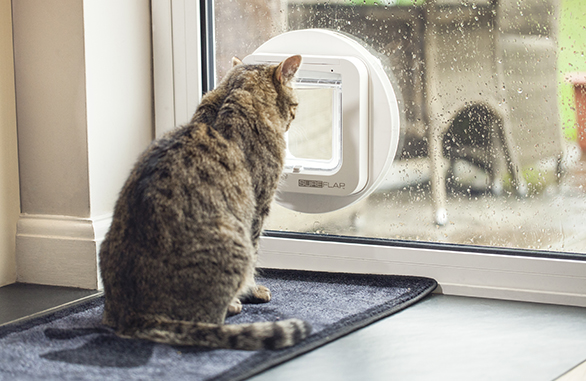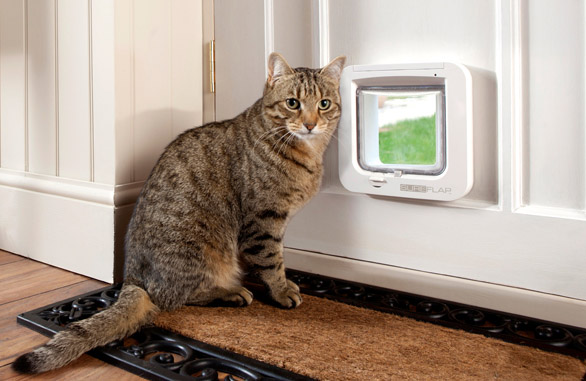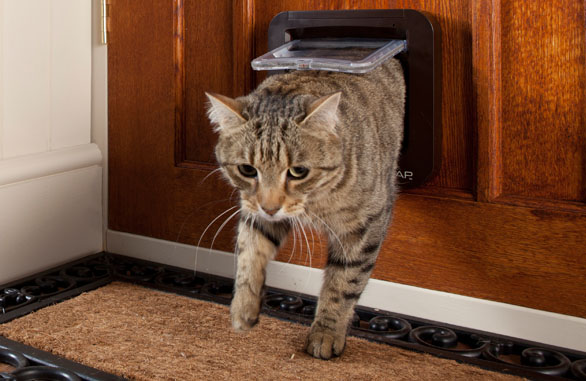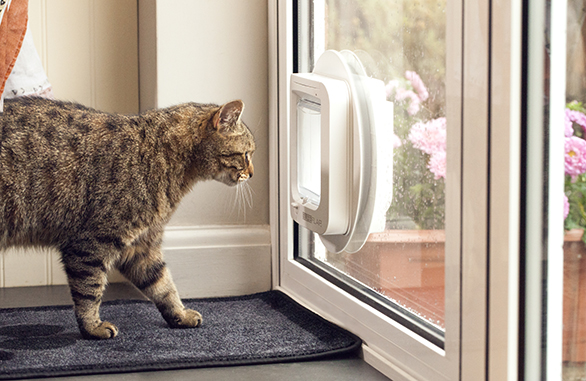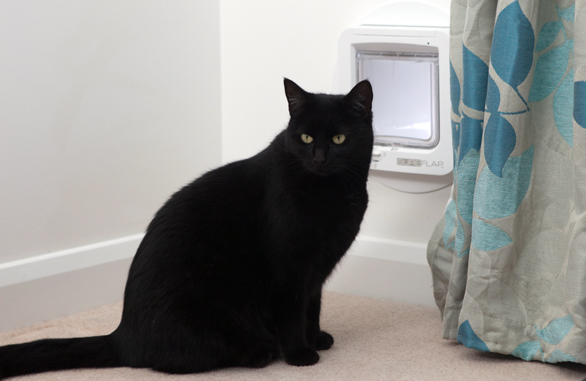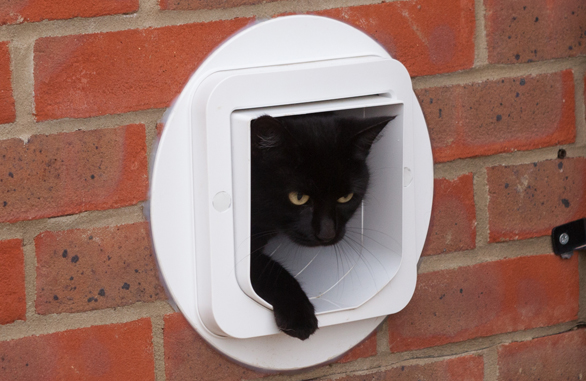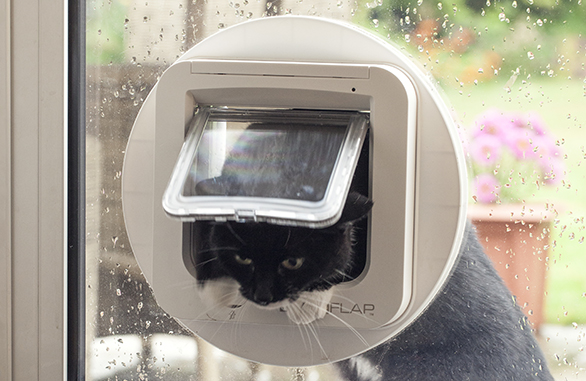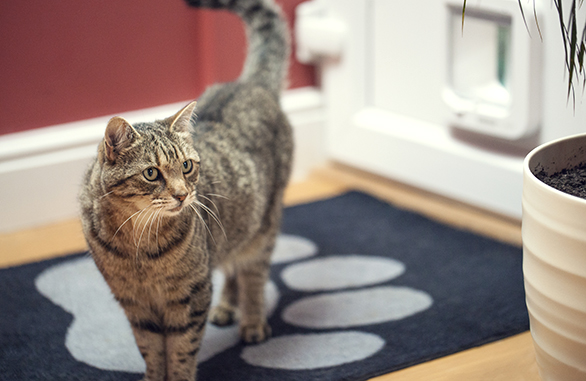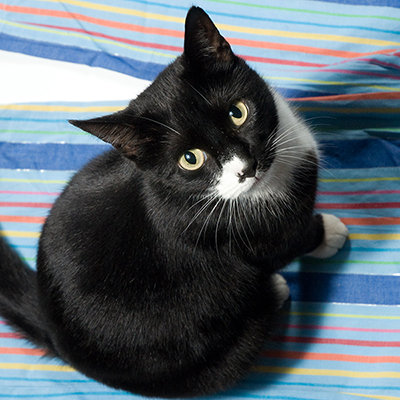
Click on the images of Happy SureFlap Cats to see what some of our recent customers had to say about the SureFlap Microchip Cat Door
Unlike many other selective entry cat doors, the SureFlap cat door reads the unique number of your cat’s microchip, which acts as an electronic door key to grant access only for your cat(s). This means that your cat does not need to wear a collar, which some cats find uncomfortable.
There is no need to worry about which type of microchip your cat has, as the SureFlap Microchip Cat Door is compatible with all microchip types commonly used in cats.
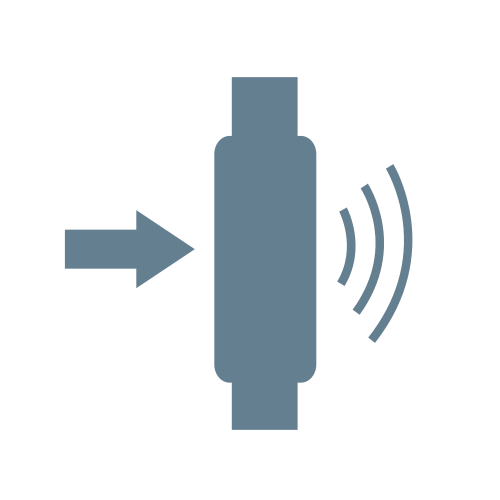
The SureFlap Microchip Cat Door uses patented low power Radio Frequency Identification (RFID) technology which enables it to run exclusively on batteries. It has been designed to scan for a cat’s microchip only when it detects a cat’s head in the tunnel, thereby saving power. For this reason typical battery life is up to 12 months with normal use.
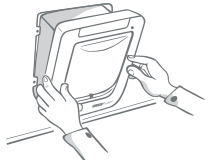
The streamlined design of the SureFlap Microchip Cat Door incorporates the microchip reader into the tunnel of the product, so there is no need for a porch which protrudes on the exterior of the house. The simple two-part construction also makes the SureFlap cat flap very quick and easy to install.

The SureFlap Microchip Cat Door has won several industry awards and has sold over 200,000 units worldwide since its launch in 2008. To read what some of our customers have said about the product, visit the Happy Cats album on our Facebook page.
Yes. The SureFlap Microchip Cat Door is compatible with the following types of identification microchip commonly used for pets:
15-digit microchips (also known as FDXB, standard in Europe)
10-digit microchips* (also known as FDXA, most commonly used in the USA)
9-digit microchips (also known as Avid Secure/Encrypted Chip)
If you are unsure whether your pet’s microchip is compatible, please use our Microchip Compatibility Checker.
In order to ensure operation with your cat’s microchip we advise testing BEFORE installation.
* Except those with codes starting 000…, 010…, 020… (most commonly found in the USA)
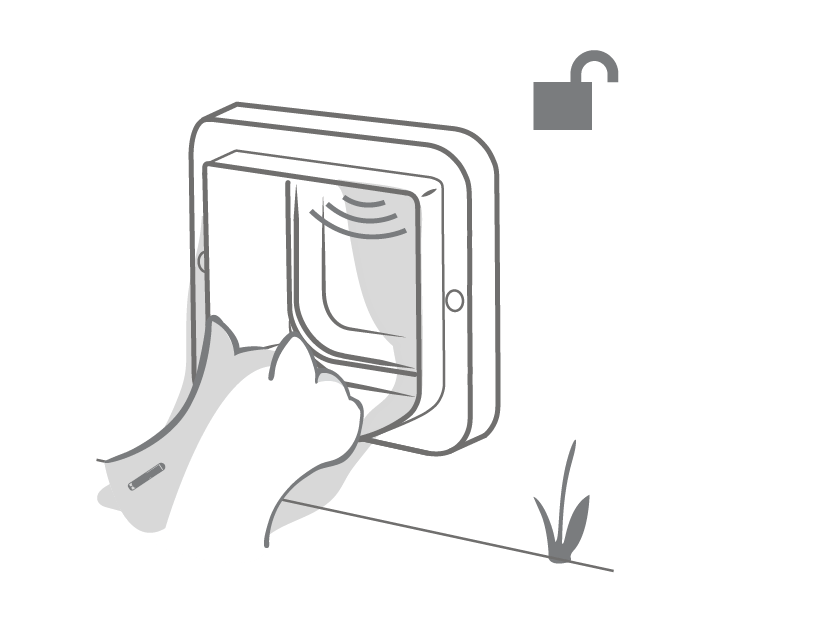
When the SureFlap Microchip Cat Door is put into learn mode, the door unlocks automatically. The cat door reads the microchip of the next cat to go through the door and its unique ID number is stored in the memory permanently. Your cat will now be recognised by the cat door. Simply repeat this process for each of your pets.
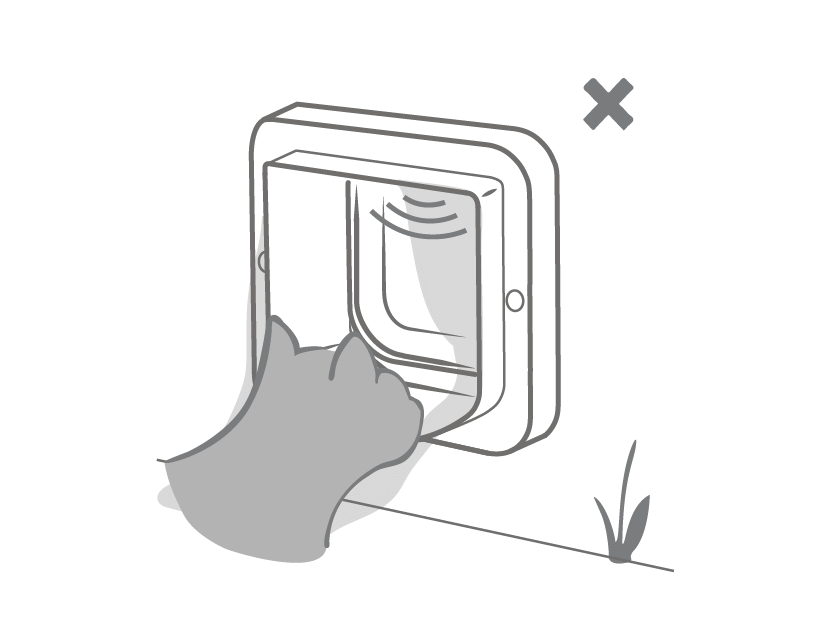
No. Each microchip has a unique code, so the cat door will only open for your pet(s).
Yes, the SureFlap Microchip Cat Door can remember up to 32 different cats at the same time - more than enough for most people's lifetime!
There is also the option to wipe the memory if you mistakenly program the wrong cat into memory.
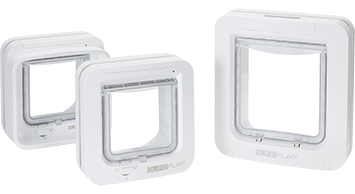
The SureFlap Microchip Pet Door is a larger sized pet door, suitable for all cats and small dogs.
The SureFlap Microchip Cat Door is suitable for the vast majority of cats, however some large breeds of cat, such as Maine Coon, may find that the SureFlap Microchip Pet Door is better suited to their needs.
The SureFlap Microchip Cat Door is available in white or brown.
The SureFlap Microchip Cat Door is a selective entry cat door, which means that it stops unwanted visitors coming into your house. In normal mode, any animal inside is able to leave the house.
You can use the 4-way manual lock to stop any animal entering and/or leaving the house, but you cannot do this selectively for different cats.
We will be launching a selective exit version of the SureFlap Microchip Cat Door in 2013, which will enable you to keep some of your pets in the house, whilst letting others exit via the cat door. Information about this product will be available on our website closer to its launch date.
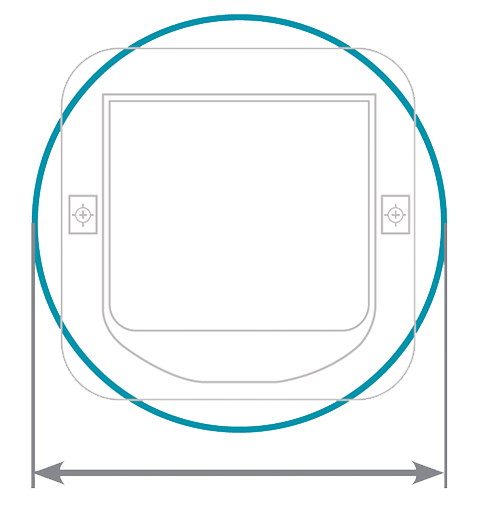
The easiest solution is to use the SureFlap Microchip Cat Door Mounting Adaptor. This adaptor extends the area of the cat door to cover holes up to 10¼"
in diameter.
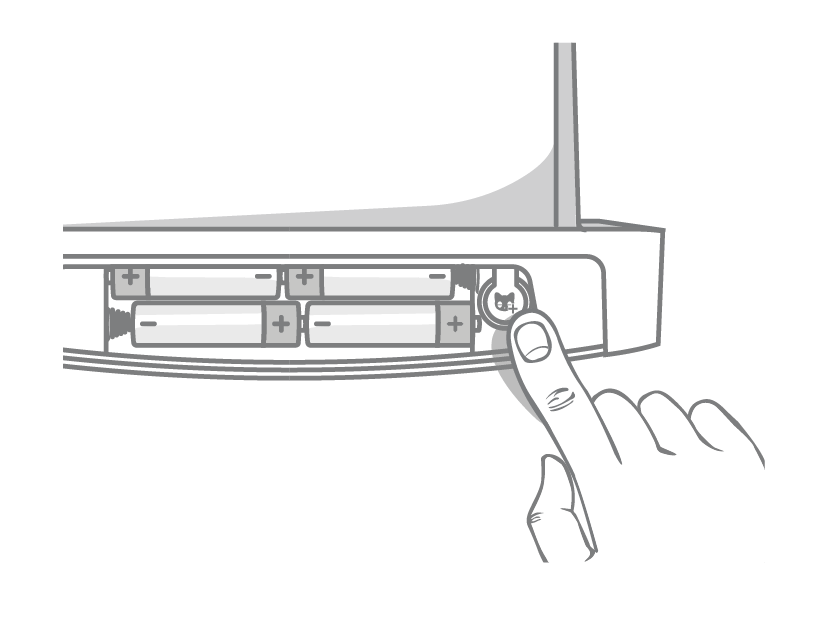
The SureFlap Microchip Cat Door operates using 4 AA (1.5V) batteries. We recommend the use of good quality, alkaline batteries in order to give the longest lifetime. We do not recommend using rechargeable batteries because they generally produce a lower voltage which may cause the low battery indicator light to flash, even when the batteries do not need recharging.



With normal usage, one set of batteries will typically last for up to 12 months. The low battery indicator light will begin to flash every 5 seconds when the batteries need changing. The low battery indicator light usually begins to flash 2-3 days before the batteries run down.
Yes, once a cat’s microchip number is stored in memory, it stays there whether the batteries are in place or not.